
Key Takeaway 
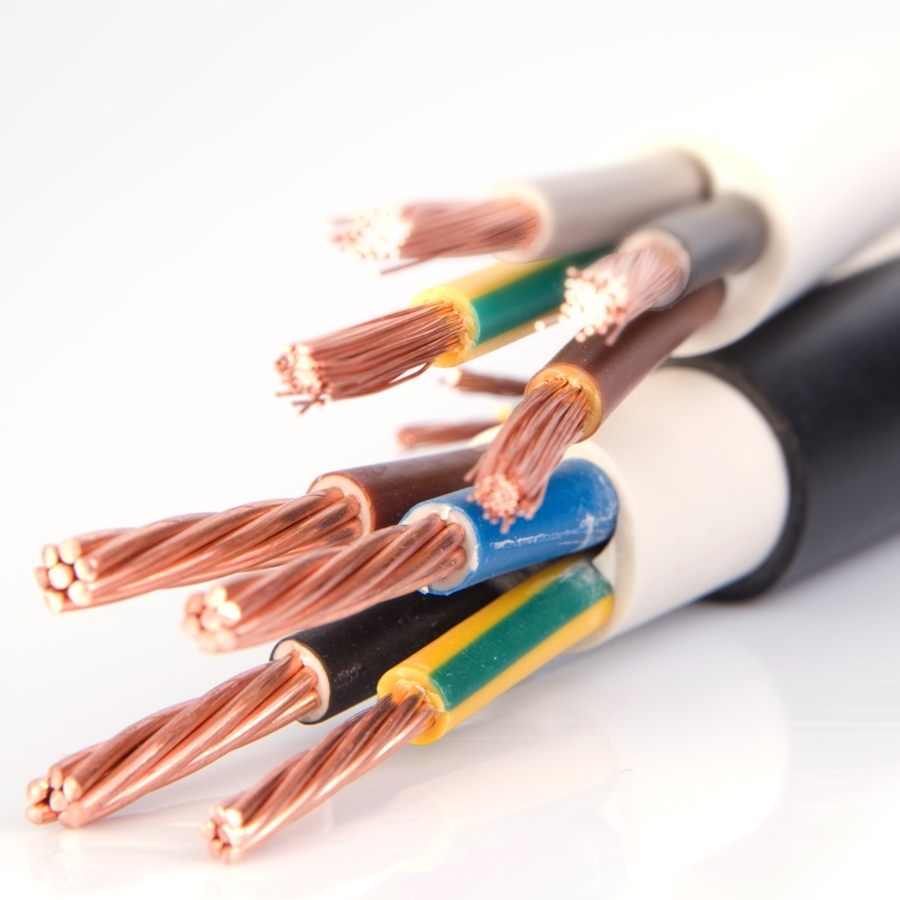
A Low Smoke Zero Halogen (LSZH) cable is designed to emit minimal smoke and no halogen acids when exposed to fire, reducing toxicity and corrosion in enclosed spaces. LSZH cables are commonly required in public buildings, transportation systems, medical environments, and mission-critical infrastructure where human safety and equipment protection are paramount.
What does “Low Smoke Zero Halogen” actually mean?
Low Smoke Zero Halogen (LSZH) describes a class of cable jacket and insulation materials engineered for improved fire safety.
Specifically, LSZH cables are designed to:
- Emit very low smoke density when burned
- Contain no halogen elements (no chlorine, fluorine, bromine, or iodine)
- Avoid producing corrosive or toxic acid gases during combustion
This is a major departure from traditional PVC-jacketed cables, which can release dense smoke and hydrochloric acid gas in a fire—posing serious risks to people and electronics.
Why are halogens a problem in a fire?
Halogens are commonly used in standard cable compounds because they improve flame resistance. However, when halogenated materials burn:
- They release toxic, acidic gases
- Smoke becomes dense and opaque, limiting visibility
- Acidic residues can destroy sensitive electronics, even far from the fire source
In confined or occupied spaces, these effects can be more dangerous than the fire itself.
What materials are used in LSZH cable jackets?
LSZH cables typically use halogen-free, flame-retardant compounds, such as:
- Cross-linked polyolefin (XLPO)
- Modified polyolefin blends
- Thermoplastic elastomers (TPE-based LSZH)
- Specialized halogen-free flame-retardant polymers
Material selection depends on flexibility, temperature rating, chemical resistance, and applicable standards—areas where Galaxy engineers regularly support custom designs .
When is LSZH cable required?
LSZH cable is often mandatory or strongly recommended in environments where people, electronics, or evacuation visibility must be protected.
Common LSZH-required or LSZH-preferred environments
- Public buildings (airports, schools, hospitals, data centers)
- Transportation systems (rail, subway, marine, aerospace interiors)
- Medical devices and labs
- Telecom rooms and network infrastructure
- Industrial automation in enclosed facilities
- Defense and mission-critical systems
Many international and regional regulations explicitly specify LSZH materials for these applications.
Which standards reference LSZH cable?
LSZH requirements are typically defined through smoke, toxicity, and halogen content test methods, not a single universal spec.
Commonly referenced standards include:
- IEC 60754-1 / 60754-2 – Halogen acid gas content and acidity
- IEC 61034 – Smoke density measurement
- EN 50267 / EN 50525 – European halogen-free cable standards
- BS 7211 / BS 6724 – UK fire-performance cable standards
- Rail, marine, and aerospace specifications that mandate LSZH materials
Galaxy frequently supports customers navigating these requirements across UL, CSA, IEC, and application-specific specs .
LSZH vs PVC: what’s the difference?
| Feature | LSZH Cable | PVC Cable |
| Halogens | None | Contains chlorine |
| Smoke in fire | Very low | Dense, opaque |
| Toxic gas | Minimal | High (acidic gases) |
| Corrosive residue | Minimal | Severe |
| Cost | Higher | Lower |
| Typical use | Safety-critical | General purpose |
PVC is still acceptable—and common—in many industrial applications. LSZH is chosen when safety, compliance, or equipment protection outweigh cost.
Is LSZH always the right choice?
Not always. LSZH compounds may have trade-offs such as:
- Reduced chemical resistance vs some PVCs
- Slightly stiffer mechanical properties
- Higher material cost
That’s why LSZH selection should be application-driven, not assumed. Galaxy engineers routinely help OEMs determine whether LSZH is required—or if another compound better fits performance and compliance goals .
Can Galaxy Wire & Cable build LSZH cable assemblies?
Yes. Galaxy Wire & Cable designs and manufactures custom LSZH wire, cable, and complete assemblies, including:
- Multi-conductor LSZH cables
- LSZH cable assemblies and harnesses
- Hybrid power-and-signal constructions
- LSZH solutions for medical, transportation, industrial, and defense systems
All builds are supported with material traceability, standards alignment, and engineering review .
Frequently Asked Questions (FAQ)
What does LSZH stand for in cable specifications?
LSZH stands for Low Smoke Zero Halogen, indicating a cable that emits minimal smoke and no halogen gases during combustion.
Are LSZH cables required by code in the U.S.?
LSZH is not universally mandated by U.S. NEC, but it is often required by project specs, OEM standards, transportation authorities, and international regulations.
Is LSZH the same as plenum-rated cable?
No. Plenum ratings (CMP) address flame spread and smoke, but plenum cables may still contain halogens unless explicitly specified as LSZH.
Are LSZH cables more expensive?
Yes, typically due to specialized materials and processing—but the cost is justified in safety-critical environments.
Can LSZH cable be customized?
Absolutely. LSZH is a material class, not a fixed design. Conductors, shielding, jacketing, and performance can all be customized.
Ready to specify LSZH cable for your application?
Whether you’re designing a medical device, transportation system, industrial enclosure, or mission-critical platform, Galaxy Wire & Cable can help you select and build the right LSZH solution.
Request a custom LSZH cable quote or engineering review today.